Acalya Heeren
Verified buyer · 2026-09-20This is super handy for people who always knock their drinks over. It’s a great purchase. I'm happy with it.
FOR THE PROJECT YOU CANNOT PUT DOWN.
Steadi slips onto a compatible drink to give it a wider base on your sewing table. Keep it close, with clear space around your fabric and machine.
From $14.95 · Free US shipping
See the actual product ↓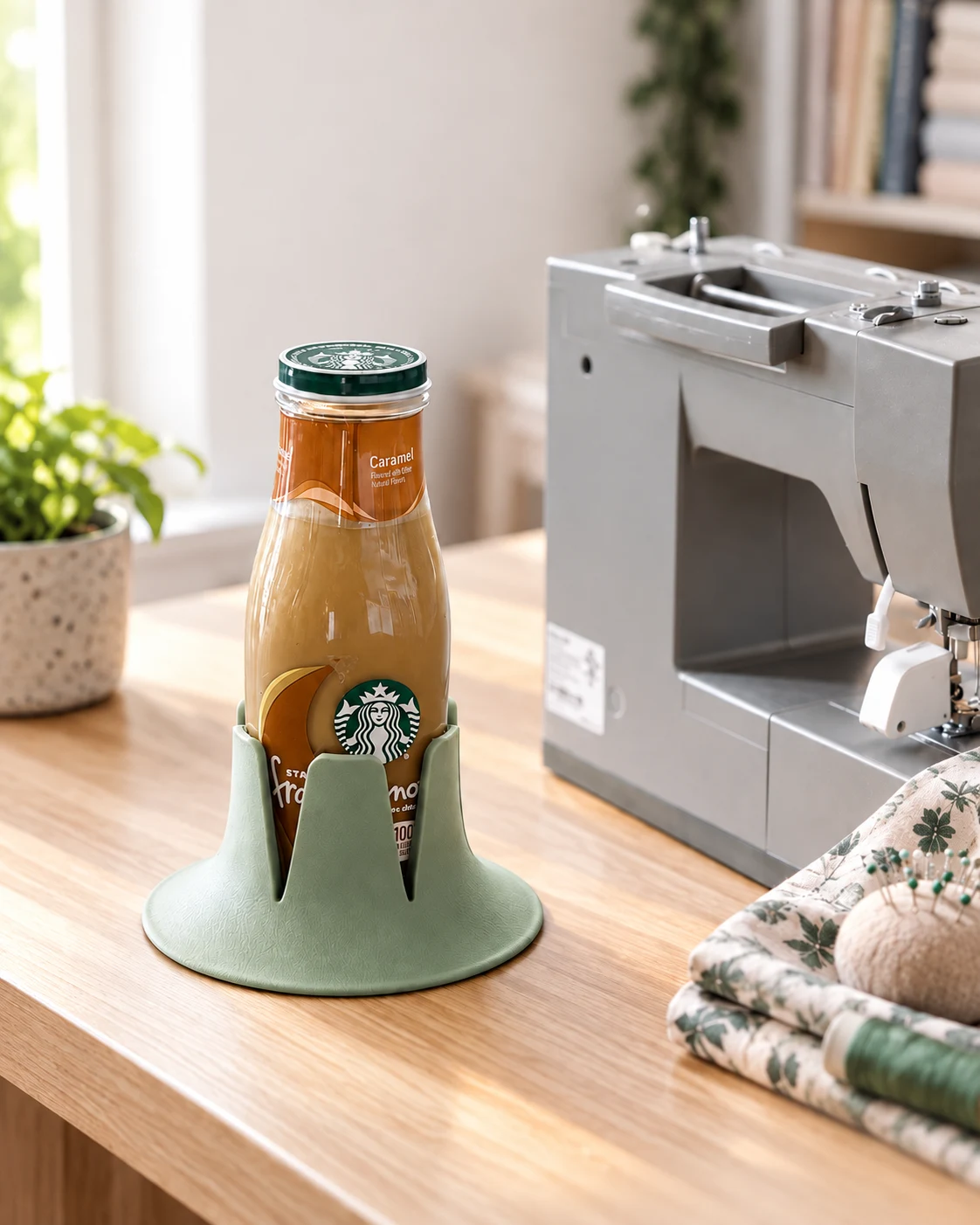
From $14.95 · Free US shipping
See the actual product ↓FROM A VERIFIED STEADI CUSTOMER
“Great item; has saved many a tablecloth and placemat.”Julie Nilsen · Verified buyer
Great item; has saved many a tablecloth and placemat.
A customer’s experience with Steadi. Results depend on the drink, fit and surface.
Actual customer photos · Steadi in everyday use
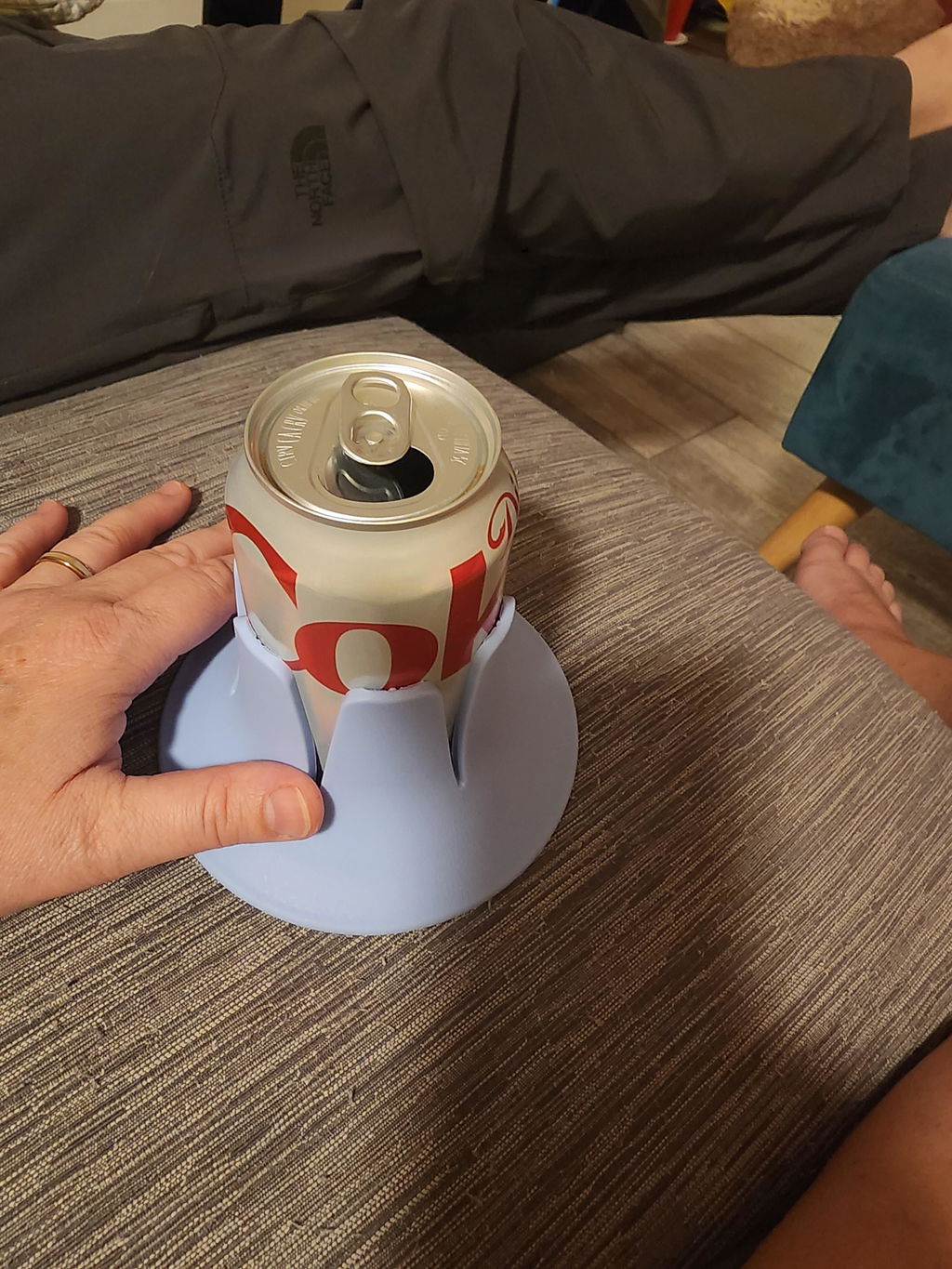
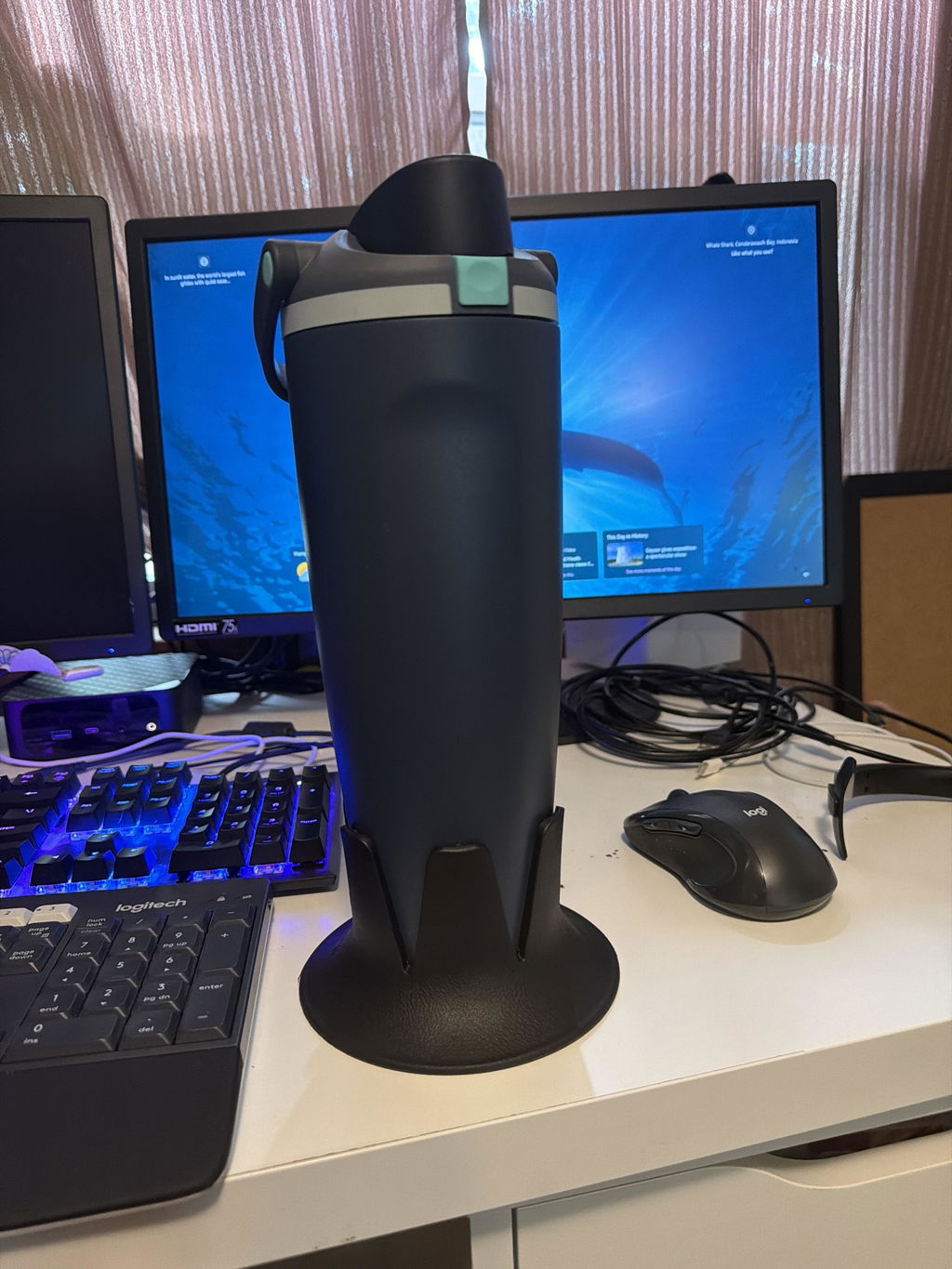
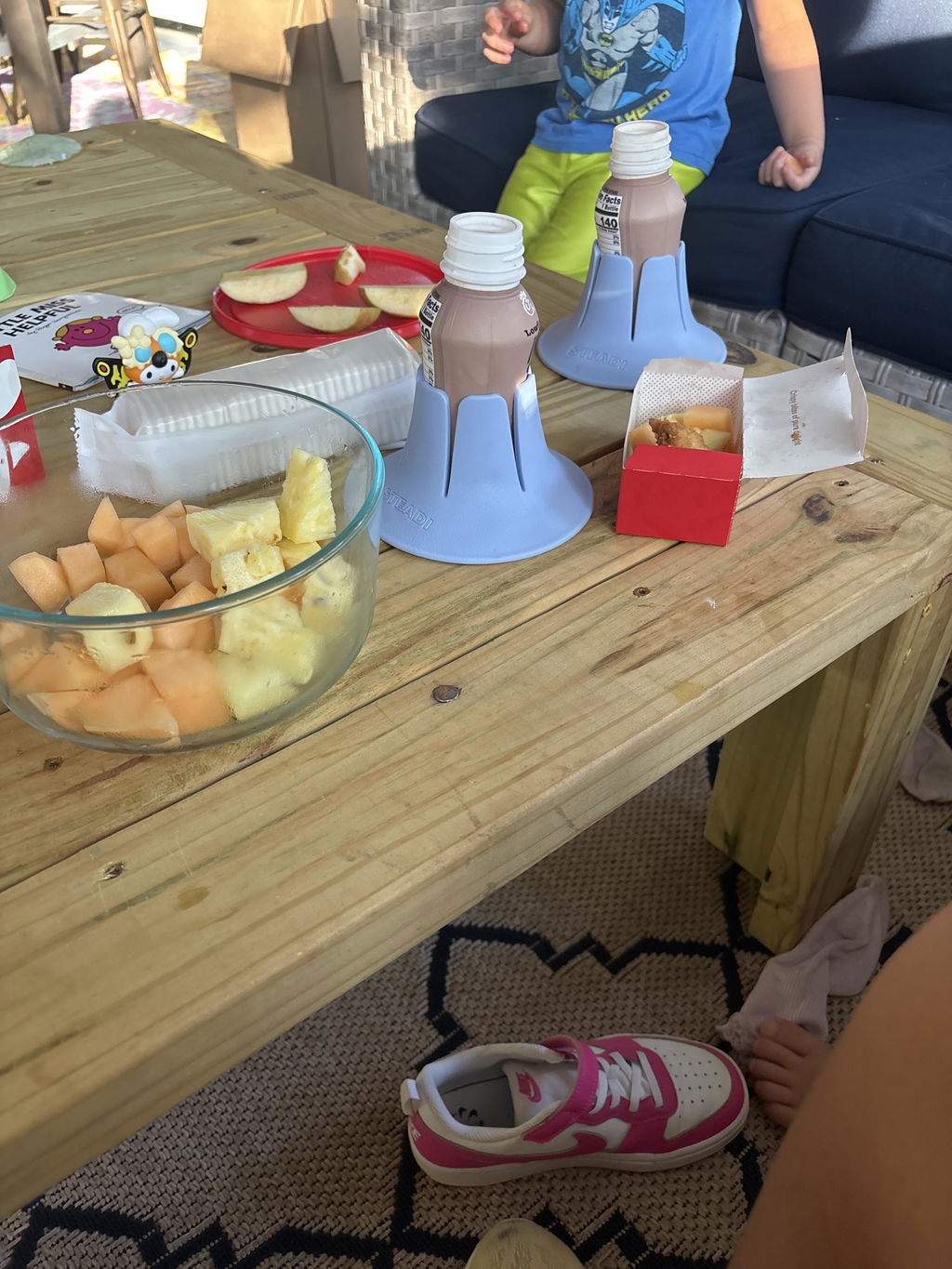
Read all 103 reviews & see customer photos →
A LITTLE MORE BASE. A LOT MORE USEFUL.
Six flexible fins grip the bottom of your drink. A broad, 5.2-inch footprint helps it resist tipping.
Fit Steadi around the base of a compatible drink.
Choose a broad, reasonably level surface that supports the whole base.
A snug-fitting Steadi comes with your drink when you pick it up.
FOR THE PROJECT YOU CANNOT PUT DOWN.
Cutting, pinning, stitching, unpicking. Set your drink in a Steadi on a clear part of the table, away from moving fabric and the path of your hands.
Steadi helps resist tipping; it does not protect a machine or fabric from liquid. Keep drinks clear of electrical equipment and valuable work.
Find your drink’s fit →KEEP YOUR FAVORITE DRINK.
Search your brand and model to check your drink’s fit.
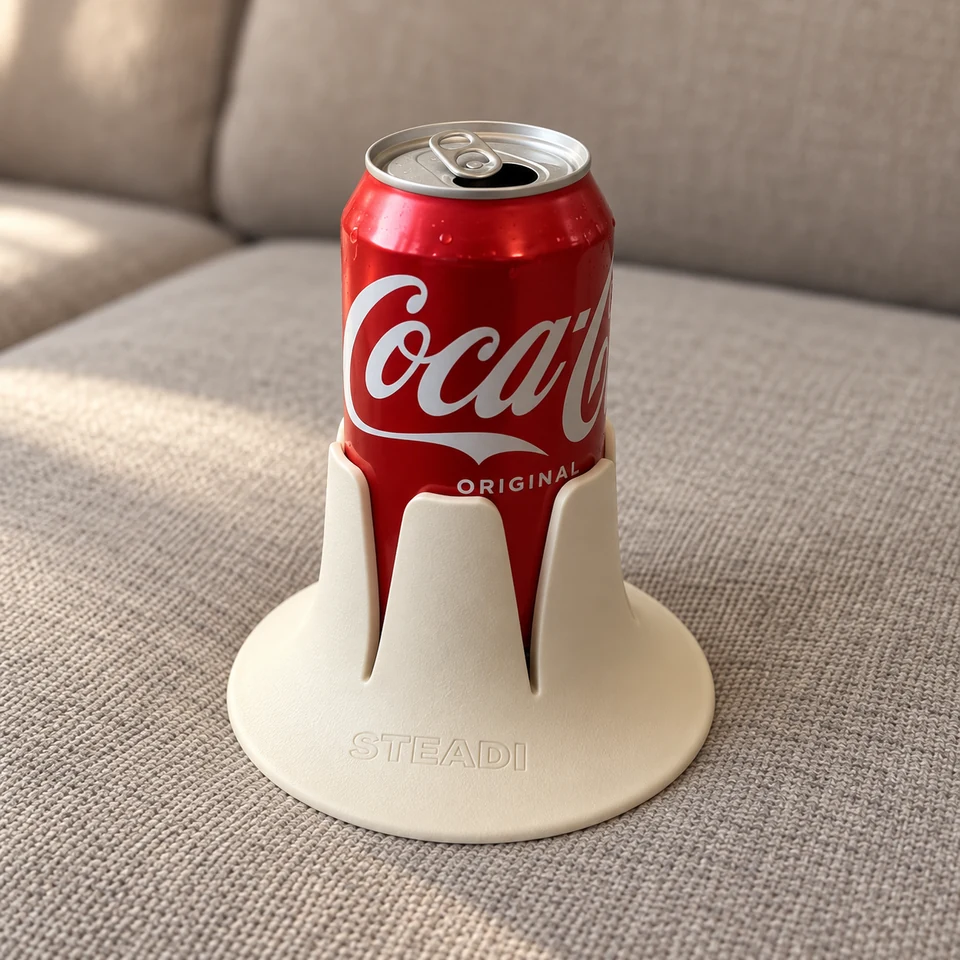
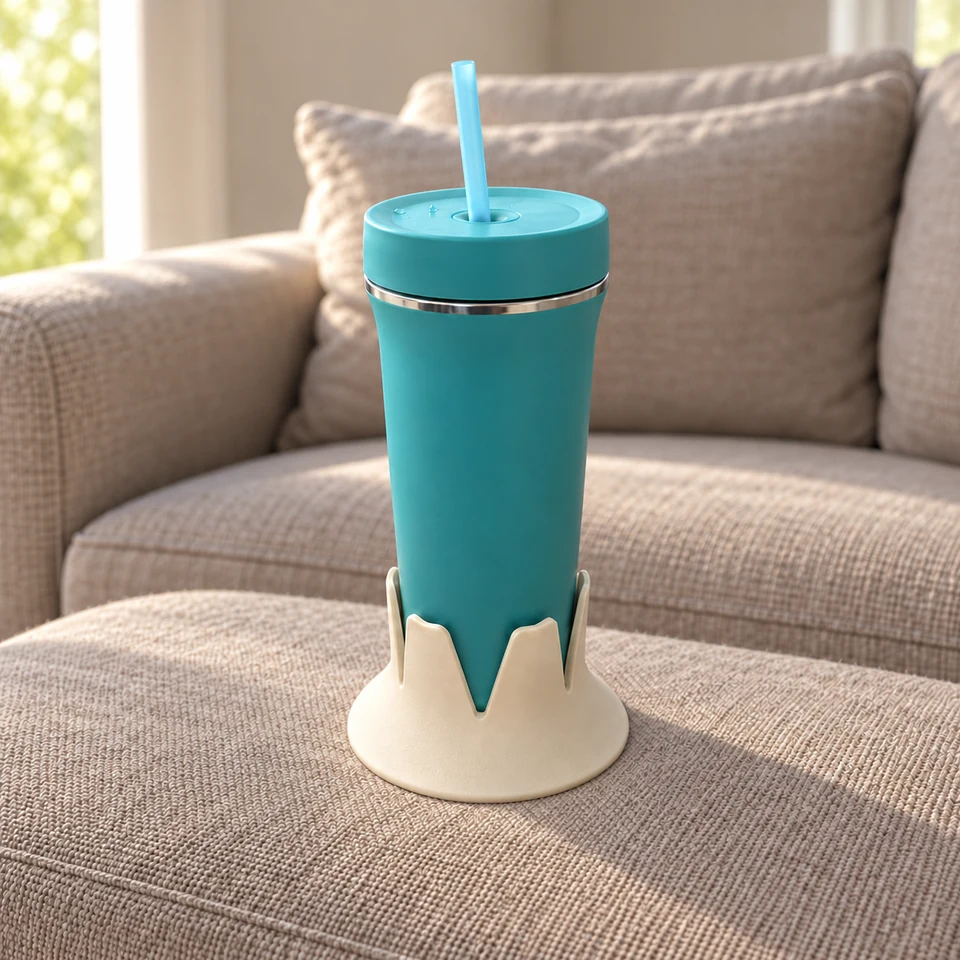
Search your brand and exact model.
Check the size and model in the result. Similar-looking cups can fit differently.
No match yet. That does not mean it won’t fit. Check the base size below, or ask us about your exact cup.
Not listed? Drink bases 2–3 inches fit; up to 3.15 inches is snug. Check the bottom, not the rim.
Cans, compatible bottles and tapered tumblers can all find their fit. Check the base width and shape; low mug handles can interfere with the fins.
ONE FOR YOUR SPOT. A FEW FOR YOUR PEOPLE.
Find your color. Keep one nearby. Have a few for company.
Loading current prices and colors…
Shop at Steadi Labs →Holder only. Drinkware not included.
Free US shipping · Secure checkout at Steadi Labs
REAL CUSTOMERS. THEIR OWN WORDS AND PHOTOS.
Reviews of the same Steadi drink holder, across all the places people use it.
103 published reviews
Sourced from Judge.me · Updated September 22, 2026. These are Steadi product reviews, not reviews exclusive to this use case.
103 reviews
This is super handy for people who always knock their drinks over. It’s a great purchase. I'm happy with it.
I have three kids, 6, 4 and 8 months…..they very rarely spill anything and are great kids. I on the other hand, have no idea how to keep a drink upright. I bought these for me. And I love them. I even use them for my tall 40 oz Owala and it does a great job of holding it up. Amazing product
I love these. Colors are perfect. Hold items stable and so far no spills.
We love our Steadies! My kids prefer to drink out of open mouth cups as opposed to sippy cups. The problem is they often knock them over. This has solved the problem!
Love so much bought some for my three children. Wonderful product. Use all the time. I’m in a nursing home with above the knee amputation. Works so well, cool product!!!!
absolutely wonderful item. I would definitely recommend to others and will
I have a tendency to spill my drinks and have two cats. This is one of the best things I’ve ever impulse bought. It works. It actually works. It’s a heavy, wide enough base that it is actually stable. My “spot” in the living room is near a somewhat-cushioned fabric ottoman, which is where I usually put my drinks. It’s totally stable on this cushioned surface. It fits cans, bottlers, glasses. It doesn’t get bent out of shape. It’s exactly what I needed.
I love mine. I just wish the price was more appropriate. $15 seems a lot for a small plastic item. Reduce it to $9.99 and free shipping and I'll buy a few more!
Thank you for your service!
It’s great love it
I love my Steadi can holder. I use an ottoman beside my couch for drinks and remotes. This keeps a can steady and allows me to have a can of soda or water nearby. Im disabled and its hard to get up repeatedly for a drink!
not as steady as I would like but it is working just fine. It does slide a little. Overall it was a good purchase.
I really love these! I can leave my drinks on the couch cushion next to me and not worry about them spilling. I like to sit in the corner seat of my sectional, so there’s no table on either side of me. These are the perfect solution without having to get up every time I want to take a sip.
I am so happy. I leave it on my cup 24/7!
Great stabilizer for around the house. Our drinks love it. 😍
I really like this product, but the only thing is that when you use it with a larger container and then you use it with a smaller one it doesn’t grasp it.
Works great! None of our cats have knocked any drink over yet.
Love it!
This is a great invention …I have a clumsy child that always knocks over drinks and this thing keeps the drink from tipping over…I couldn’t believe how well it works. A+ highly recommend.
I love them. Going to order more for Christmas presents. Like the fast and free shipping!
Love mine!!
It works quite well........just need a little more time using it to get the best results.
Genius! Finally I can sit in a corner of the couch and have my drink next to me. Works beautifully, sturdy and stable. I'm very happy I found this item.
Works great! If it saves you from cleaning your sofa or rug or washing anything it is worth it. Give it a try!
My kid doesn’t spill his drink in his bed anymore so….. it’s a win!
Love these!
Really does keep your drink cans and bottles from tipping over! We are quite impressed with these!
The Steadi is everything you claimed. I place a tray on the couch cushion next to me with the Steadi, while watching TV. It’s so stable that it doesn’t budge when I get up and sit down. Is the Steadi dishwasher and/or microwave safe.
This is a great product. Does exactly as it is advertised. No more turned over water containers due to my nosey cats. My granddaughter can reach it but she can't tip it over. 😁😁
Sits right next to me on the couch, and now my coffee doesn’t spill
Love ‘em. One next to TV, the other in the car.
Love it! (:
They love them
So I bought one as a mother’s day gift. It took a sec to figure it out and then she tried it, not so long story short she loves it. She as one in her office, one here and I think she gave the other two away as gifts because they’re that good. And I have to say it’s pretty sturdy and come in a nice range of colors that fit in pretty much anywhere.
Amazing product! Great for the couch and with kids that love to just plop down like animals. With Steadi, drinks are nearly impossible to spill
Steadi works very well in stabilizing my drinks on soft surfaces, like the couch or by the chair I use as a nightstand.
Love these! We have a huge sectional, so we can’t always reach an end table but now we don’t need to. Even we the dogs jump on the couch nothing spills.
Love it! Just as advertised!
Great item; has saved many a tablecloth and placemat.
Literally love these. Living with chronic illness sucks and often means dinner in bed, and limiting my beverage to my side table when I have the whole mattress to picnic? I was wishing something like this existed and the algorithm delivered. Simple, lightweight, flexible! Immediately rec’d to all my friends, regardless of ability. Two thoughts- a version for mugs? Also, bright color options so I can have a hilighter orange to match my aesthetic.
I could finally throw away all my sponges that I don’t need to mop up peoples spills! Thank you!
The design for this is amazing. Simple and highly effective. No longer worrying about knocking over my drink from the side table or setting down my drink on a picnic blanket.
These will be so useful.
I'm glad I purchased these.
This is such a stable base for drinks in all shapes and sizes. What a great invention!
Awesome!-- works just as described. They don't disappoint!
they are totally awesome!!!
Lives up to the advertisement
It’s great!
These work great!
I had to order these (in case I didn’t see them again.) I was hoping shipping wouldn’t take too long and it didn’t. We just love them. Our friends are visit and using them while sitting on the sofa with their beers. I can even fit my thinner koozie under mine, for my soda. Happy I purchased them. They’re also a conversation piece. When I took them out of the cabinet, our friend said “I was wondering what those were.” I got the four different colors and they look really nice.
OMG!!!!! YOU HAVE TO BUY THESE!!!!!! i tested it out today on an old tv tray (wood and very slippery) and put a soda in it and played like “oops i bumped my tray” (and really hard) and NADA, NOPE, NOT AN INCH OF MOVEMENT from the STEADI. everything else went flying!!! cuz dummy me didn’t remove those other items first 🙃 duh!!! and no it was not suctioned to my tray cuz it doesn’t do that. but WOW!!!!! what a great invention. wish i was thinking up this GREAT IDEA, instead of binge watching TRAITORS tv shows and SPILLING my soda as i jump with excitement/anger over the show. the plus side, while flipping thru FB (while the commercial is on) or i’m cleaning up my spilt soda 🤪….. i saw this ad and it was like angels were singing “BUY ME AND UR PRAYERS ARE ANSWERED”. so glad i did. they work great!!! i bought the 4ct from actual website and it shipped quick and packaging was perfect. all 4 colors are great!! black, white, deep terracotta (plant holder) color. very very nice color. especially during the fall. and a muted warm sage color. very nice also. FYI:: i forgot to mention, i even tested this out with a 8oz dinner cup and it worked perfectly. but put the cup in FIRST then add beverage…..LOL learn from my dumb remark of “i can get it around the cup filled to the brim and not drop a lick of this drink. well WRONG!!!! 😑 LOL!!! user error not the STEADI. buy this and trust me u won’t want to return it. oh and it is comfortable to hold. and actually, now i can set my can of soda down with a mighty slap on the table and a huff and puff in disgust, if my tv show is calling for my dark side to come out in anger, of their decision of who to banish on TRAITORS (US/UK/NZ/ and now CANDA)!! ENJOY!!!! and THANK YOU TO THE INVENTOR!!!!! i hear it’s a father of 3. 🤷♀️
I absolutely recommend Steadi!! These are a lifesaver! They are well made and extremely well thought of and created!
Love my Steadi holders! I purchased two but plan to purchase more to give as gifts. Great customer service answering my questions and fast shipping.Where have these been all my life? No more spills on the sofa, trying to balance a drink or a bottle against the pillows. 100% satisfied customer. Great invention.
My friends love the Steadis. Their motorboat had no place for drinks, and no flat surfaces!
Works great.
No free essays today
These are EXCELLENT!! As a mom, I couldn't be happier!! Thank you!
I am usually skeptical of online merchants that advertise on Facebook, so I did some research before ordering from Getsteadi.com. After reviewing the company online, I felt confident that it was a reliable merchant. I placed my order on June 10, 2026, and it shipped from California within just a few hours. A USPS tracking number was provided right away, and my order arrived on June 12, 2026. That level of speed and efficiency is impressive. Based on the Facebook photos, I initially thought the can holders might be somewhat large. Once they arrived, however, I found that they were the perfect size and worked exactly as advertised. I was also impressed by the daily email updates I received about the status of my order. Getsteadi.com provided excellent communication, strong customer service, and a product that met my expectations. Overall, this was a great experience with a great company and a great product.
Great quality Good communication from the company They work great!
They work as good as they’ve been advertised. Great product.
Work well for couches!
Fabulous, just like I hoped for . Very handy and terracotta color is lovely
What an amazing invention!
Like them. Good quality
Thought it was great. At work I’ve had 5 people ask me where to get it and took a picture of the name. With finagling you can put your starbucks in it also.
Super steady, well made, works great. You will not knock over cans if you set them on furniture.
Steadi- Just what I was looking for! I purchased these to use at our annual NASCAR race this month. They delivered beyond my expectations. Our seats are metal benches with a slight slope towards the back, making it impossible to set down any type of drink. We were able to use these for a 20oz bottle with a koozie on it as well as a slim can with an insulated Brumate on it! They worked perfect, holding our drinks on the bench & on our cooler. I highly recommend for sporting fans, boaters, outdoor adventures. Thanks for making these!
These things are awesome! I drink more Diet Pepsi than I care to admit. And my wife likes to fill my end tables with little knickknacks or pictures so I usually drink from the small plastic bottles that I can close and have them lay on the couch beside me. Now I go for the cheaper cans! My son even thought it was a good idea. But he likes to stick his McDonald’s soda cup in there. It still works, so we’ll see how that goes.
5 star
Absolutely love these holders. When I showed them to my husband, he was amazed. He has stage 4 cancer and is jitttery. No more knocking cups over !!
Excellent product. Does exactly what I expected and does it well. Highly recommended.
Seems to work okay I though the base would be heavier
I bought those because I am clumsy and I am gladI did. This works great, keeps a lot of messes from happening! i'm sure everybody will love it
My Steadi order arrived just as we were packing for our annual three generation family vacation. So into the car they went. Our time away is at a rental property and preventing spills in someone else’s house seems like a good goal. Additionally, most of our time is spent outside, at the house and nearby parks. The Steadi has been popular for sitting out under a pop up canopy on lawn chairs and at a picnic at a nearby state park. We brought the four we ordered and have already placed an order for more since family members have claimed the first ones! We will be boating a lot this week and are certainly looking forward to seeing how they function in canoes and kayaks at the lake. So far very pleased with the Steadi! Hoping a larger version for insulated drink bottles is in the future. Thanks for a great product!
Perfect for our home and the office! My husband has spilled multiple beverages on his keyboard so this works out great! :)
The best works just like you said!! Telling all my family and friends!
Keeps our drinks safely upright..even room for a coaster underneath. Company was diligent in working out a small issue with delivery and answered communication quickly to resolve the problem. Thank you.. I would order again
Very pleased with this. Feels premium and sturdy, and nice to look at when in use. As someone who once spilled a can of cola on the bed, I now confidently place my soda can on the bed without worry!
My desk is usually cluttered with everything. It's always a gamble whenever I have a drink on it. Steadi essentially eliminated that worry. Love it!
My husband knocked his beer onto the couch for the last time. This thing is genius.
I LOVE my 2 steadis!!! I can now have my cold canned seltzers and sodas on my sofa, my bed, it’s fabulous. I’m considering buying more for when the grandkids are here. You just cannot knock your drink over. It’s fabulous!
The Steadi is perfect for our home. It was created because of 3 children under three. It is also a great spill saved for the senior population. My husband sets his drink down while watching television. You have saved us from our frequent cleanups. The sage color matches my accent color perfectly.
This is such a fantastic idea that is very well done. We have a deep couch and 3 dogs who love to jump on it. I have tried so many trays and holders, and none of them have worked. But with my Steadi, Ican lay back on the lounger part, have my drink in arms reach, and not worry about the dogs knocking it over. My husband was skeptical, but even he is now impressed. This thing is GREAT!
I love it! We have a 2yo grandson, and he's always knocking my drink over, so this really is very helpful!
Although they took a while to finally arrive due to the re-tooling process for the updated product, I’m very happy with the finished product and have happily shared a few with a friend who has a 6-yr old child.
Every Friday is game night on the floor at our house and almost every Friday something spills. Not anymore. Thank you Steadi!
Exelente para nuestro servicio Nosotros lo ocupamos para nuestros vasos de noche para nuestra agua Antes variasveces teniamos ACCIDENTES con losderrames de agua por la obscuridad y porque uno esta medio dormido ylos tirabamos con steadi eso se acabo Gracias STEADI
As advertised and works great. If you don’t have a side table at the right spot for your couch or bed, this will solve your problem.
Purchased because I have a kitten who does parkour, and thinks "nooooo!" is a cheer. So far, so good. Saves paper towels.
I love them! My cat, however, disagrees. We have apparently ruined at least one of his lives by preventing him from knocking our drinks over every time we look away. 🤣 I bought two, but wish I had just gotten the four pack. I will be stocking up with more and giving some as gifts!
Got the 4-pack and immediately put one in every room. Office, kitchen, living room, bedroom. They live there now. Best decision.
Absolutely the coolest thing I've bought in the last 10 years. Maybe ever. Changed the way I sit on my couch. Genius. And well made. And fast shipping. These guys are the bomb. Can't live without it. I should do the voice overs for their upcoming commercials. :) Love my Steadi!
Works really great. Fits all size containers. Keeps them from getting knocked over.
We have a couple of these and we absolutely love them! They have prevented many spills and saved many drinks from being spilled over from a very active toddler knocking into them. It's so nice to use them on our boat and not have to worry about spills and can leave drinks out worry free!
They are great! They work very well in keeping the soda cans from falling over and spilling on the bed & couch when the three Beagles and one Border Collie jump on or off. They also stay steady on the little wobbly patio table outside.
This stability sleeve product is great. Really stabilizes your drink container and eliminates the chance of kids or pets accidentally knocking the drink over. Ordered a 2 pack to see how well it works. Will order more to give to family at Christmas
Love it , works just as shown
Works perfectly! Great idea!!
Brilliant idea. These are great on the boat!! Hold up nicely in the wind when my can is almost empty.
Expected it to take wider containers
Love, love LOVE them! Good quality and brilliant invention! I bought more to give to my friends!!!!
Love my Steadis! This is one of those products that you don’t know you’re missing in your life until you use it. I’ve been using these to stabilize our drinks on the couch. This way I can put it right by me rather than a few feet away on the coffee table. It’s like a cupholder that goes with your drink. Highly recommend, great value for what it does!
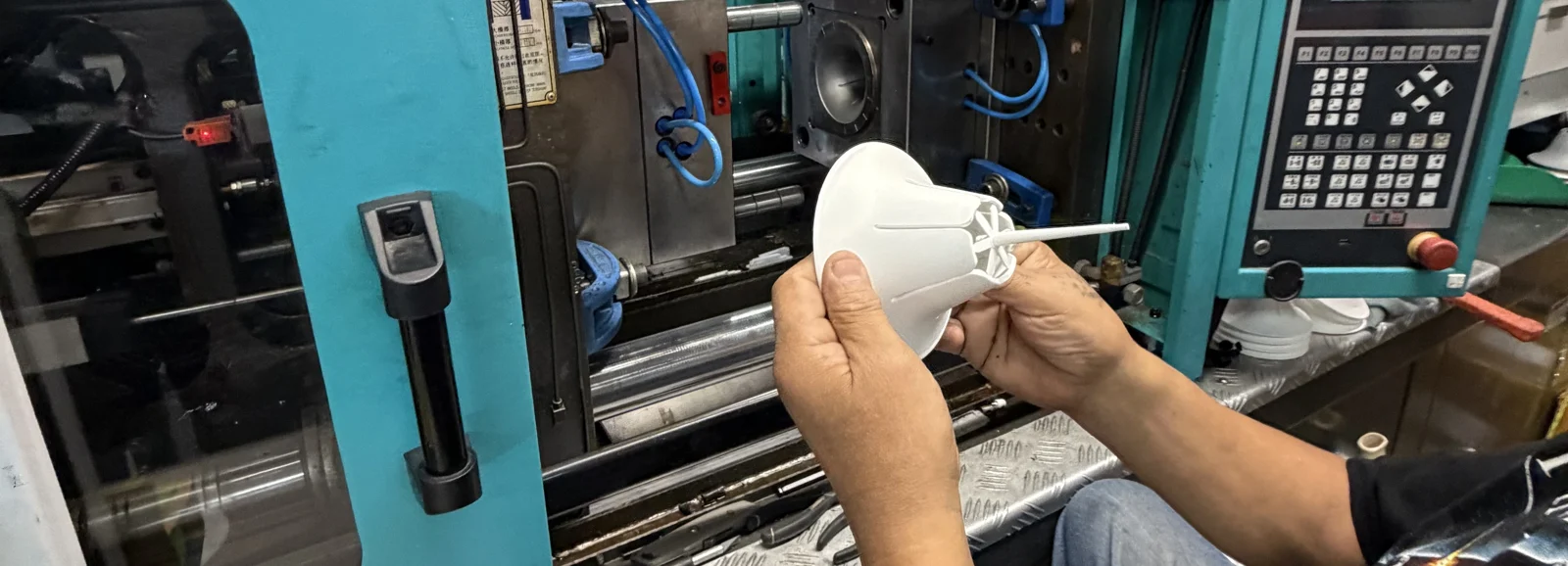
MADE HERE. MADE TO BE USED.
Made by Steadi Labs, a veteran-founded business. Easy to bring along. Easy to rinse clean. Dishwasher safe, too.
A question? Talk to us →GIVE IT A SPOT IN YOUR ROUTINE
Used is fine. Email us for a full refund.
No return shipping. You keep it.
A FEW THINGS TO KNOW
Leave enough clear space between the drink, your fabric and electrical equipment. Steadi helps resist tipping but cannot prevent every spill.
No. Steadi fits around your drink, with a broad base underneath. It does not use suction or a mounting bracket.
No. Steadi gives your drink a wider base to help resist tipping. It does not seal the top. Give the whole base a clear, supported spot. A hard knock or unstable surface can still spill a drink.
Yes. It helps resist tipping, but a hard knock, slope or unstable surface can still spill a drink. Support the whole base on a broad, reasonably level surface.
Check the bottom diameter: 2–3 inches fits; up to 3.15 inches is snug. Container size and shape vary, so measure the one you use. Low handles and unusual bases can interfere.
Rinse it, wipe it with a damp cloth, or put it in the dishwasher.
US shipping is free from Orange, California. See shipping details.
A LITTLE MORE COMFORT. RIGHT WHERE YOU ARE.
Free US shipping · 90-day money back